
A Bridge over troubled waters
6 May 2026 ……… As most people along the Garden Route know, this day was the start of a very difficult 3 weeks for most of us. With winds picking up to over 100kph, driving rain fall of 300mm causing severe flooding in some areas, thousands of trees of all sizes being blown down across roads and taking out hundreds of power lines in the area we knew we were all in for a tough time.
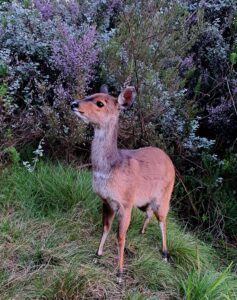
Although the strong winds, torrential rain and very poor road conditions didn’t stop two heroes from saving a life. With ALL communications down and no way to contact us or Cape Nature, On 7 May 2026 Michael Bridgeford (BirdLife Plett) and Christo arrived at Tenikwa with a tiny, cold soaking wet bushbuck, that by the signs we could see was only a couple of days old.
The waters had risen and he had become separated from his mother and nothing could be done to immediately reunite them, so Michael and Christo intervened as they had no other choice. We hoped the rain would stop and the water level would drop in hope they would come across the mother again, but the water levels were just rising daily, the winds continued to bring trees down and we made the difficult decision that the safest place for the baby bushbuck was with us
where he was getting his milk, and being kept warm and out of harms way.
where he was getting his milk, and being kept warm and out of harms way.
We called him “Bridge” after Michael who is a massive supporter of Tenikwa. Bridge is now in an outdoor enclosure browsing on all the natural vegetation he would normally eat in the wild and is still getting his bottled milk. Once he is old
enough and has had a little more time to re-wild then we will release him back to the area where he was found so he can live the life he was always meant to live.
enough and has had a little more time to re-wild then we will release him back to the area where he was found so he can live the life he was always meant to live.
What To Do If You Find An “Orphaned” Wild Animal
• Do not intervene immediately: Well-meaning members of the public often “rescue” babies
whose mothers are just nearby looking for food.
• Assess first: Observe from a distance to determine if the animal is in immediate, obvious
danger.
• Who to contact: Do not pick up the animal. Contact Tenikwa Wildlife Rescue, another local
wildlife rehabilitation centre, or CapeNature to evaluate the situation.
It is against the law to keep any indigenous wildlife without the correct permit from your local authority.
Helping wildlife is sometimes as easy as leaving wildlife where they belong. If you have concerns we are always here to advise, or find someone who will be able to help you.
By Keri McMorran